Today is the first day of school. (Applause from all the mamas ready to get back to routine…crickets from the children. You can’t win ’em all.) Like usual, I’ve got a list of unit studies planned for this year, specifically in the history and art area–sorry science, we are totally winging it this year. We love learning with unit studies and I get asked a lot about our them.
How do you plan them?
What’s a spine?
How long should a unit study last?
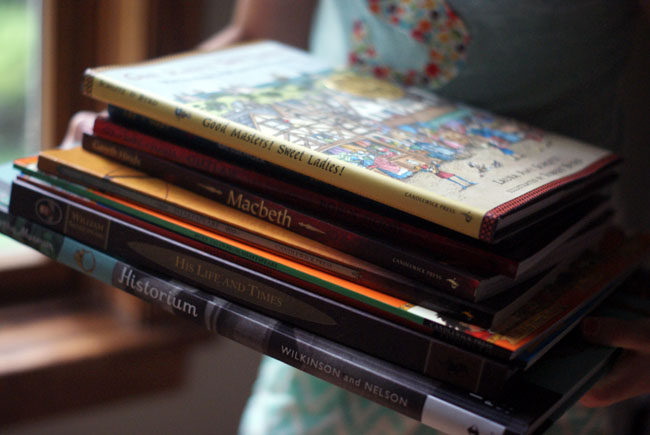
If you have wondered these things, then read on because this post is for you. Also, if you’re interested in a pile of fabulous books from Candlewick Press, perfect for unit studies, read on as well…I’ve got something for you.
This post was sponsored by Candewick Press. Thank you, to Candlewick Press for sending me these fabulous books to plan my unit study on the Middle Ages!
Here’s a simple rundown of how to plan a great unit study you and your kids are going to love:
1. Choose your subject and evaluate your timeline.
For us, most of our unit studies are on history with a little bit of random interest studies thrown in–such as our unit study on bread. I don’t really know where that came from. Whatever it is that you want or need to study this year, make a list of the topics you’re choosing to study and try to approximate how long each topic will take you. If you are studying WWII and you know your boys will dive in and read tons on the subject and want to watch every documentary out there, you might want to allow for several weeks. If you’re studying something with a more narrow scope of information, choose a shorter timeline. I find that our best studies are between 2-4 weeks.
2. Choose a “spine” for your study.
This is the part that might throw people for a loop. A spine to your study is just the
main source of information that you are basing your study on. This could be the table of contents from a public school textbook, a reference book, an autobiography, a timeline, or a number of other sources. You could use a book like
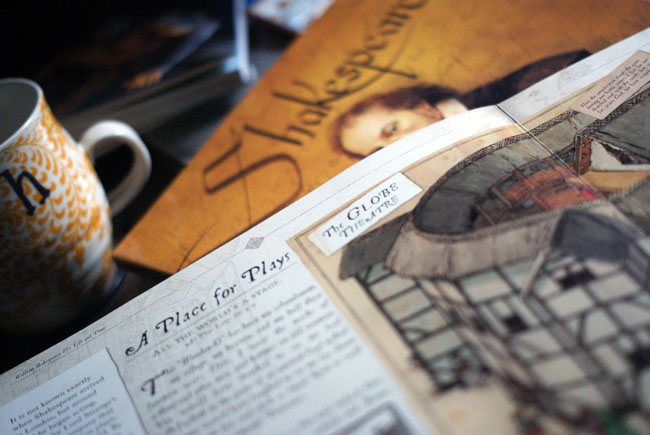
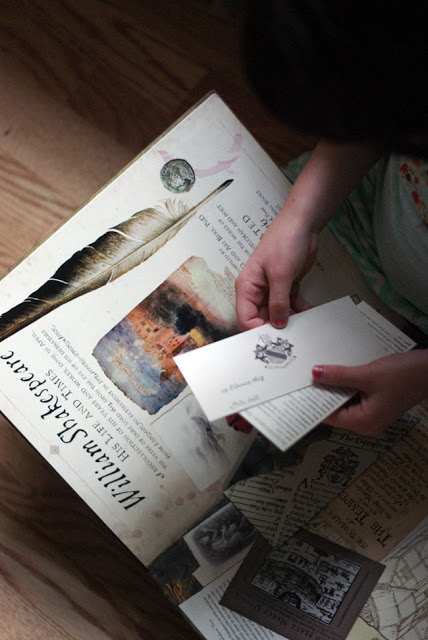
William Shakespeare: His Life and Times as your spine for your study. Read from this book everyday as the backbone of your study. Follow Shakespeare’s life through the book and choose your activities from the events of his life based on what you read.
We are big fans of Story of the World. I base our history units off this book most of the time. I will look over the table of contents and divide the topics into units and eliminate the chapters that don’t fit in with the units I want to cover. So it may look like this for our school year of units:
Chapters: 20-28//Castles + Knights Unit
Chapters: 29-32//Explorers Unit
Chapters: 33-45//The Renaissance Unit
Make sure you love the spine you are using–this will be a book you will refer back to over and over during the unit.
3. Find books to support your study.
After I know what we’re studying and how much time we have to study it, I go on a hunt for great books. I have definitely gone overboard and ordered or reserved way too many books than we could ever read for certain studies. But having a lot to choose from is good. Consider your kids and how much they can handle and consider how much time you have to commit to your study.
How to find great literature to support your study
There are books out there to support any unit study you can dream up. Really.
Here’s some ideas on where to find great books:
- ask your librarian to help you…chances are there’s a whole section in your library waiting for you
- shop book sites that publish rich, interesting content like Candlewick Press
- look through your own shelves…you may already have a collection of books that will suit your needs
- spend some time looking on Pinterest–check out my history and book list boards as well as Candlewick Press’s themed boards
What types of books do you need?
I think it’s very important to choose all types of books for your unit studies. Gather reference books, fiction, non-fiction, picture books, novels, autobiographies, and graphic novels. One of my children is a big reader and will read huge books. Another on of my kids loves to page through books, even though her reading isn’t totally fluent yet, she will look at books like
Tales from Shakespeare forever. Another child loves graphic novels, so adding books like
Outlaw: The Legend of Robin Hood and
Messenger: The Legend of Joan of Arc is so great to get him really engaged too.
4. Include all the senses.
When I am planning a unit study, it is my goal to completely immerse my kids into the study. I want them to see, hear, taste, smell and touch whatever it is that we are studying. Like the books, I’ve gone way overboard before. Be wise when you’re planning and know when to say enough is enough–projects and all the extras, when done too much, can get tiring for you and your kids.
Choose a couple great projects that your kids can get their hands messy with. Plan a meal that goes with the country or time period you are studying. Listen to music from the area as well. Dress up and do a skit to review what your kids have learned.
My kids learn very well from watching documentaries or other videos. Include some of these in your study after you have pre-watched them!
Include a few writing assignments to have the kids express what they have learned or have them narrate that to you instead. We will normally spend the first 50-75% of a unit reading, notebooking, and internalizing and the last portion spewing out what we’ve learned through projects or recipes or games.
5. Create a study portfolio.
I love to have a little something to show for our study when we are finished. Using a small binder or a pronged folder, collect coloring sheets, map work, notebooking pages, or lapbook elements and put them all here to create a nice portfolio of what your children (and you!) have been studying!
6. Dive in and trust the process.
Many people are afraid that too many unit studies will leave holes in their kids’ academia. When we’re considering things like math, that is a whole different style of learning–a more systematic approach is better for subjects like that, but for things like history, art, science, geography, literature, nature, or poetry, teaching in units is a great way to learn! Your children will soon learn to place different events on their internalized timelines when they see a documentary or a story on the news. Trust the process and don’t begin to doubt your hard work and research into creating unit studies. Your children are learning–and learning well.
Related



We've done a few unit studies but this is the first year I feel like all of my boys are doing well enough that we can add in even more!
We're still fairly new to homeschooling (one year under our belt!). Last year we did a unit study for Thanksgiving. I'm not sure what we'll do this year.
We don't have unit studies yet in our family. Just starting
Thank you for the great, practical post. We also love Story of the World and buiding on the themes in those books with living literature really appeals to me!
We love doing informal unit studies based on an interest we "catch" during our reading. We've done a few more formal studies too. A favorite last year was based on Wilder's "Farmer Boy." Fun!
We don't do formal unit studies although we have paused to read books on a specific subject that the children expressed interest in.
I have boys who love to do unit studies on the military.
We do unit studies, especially my 6th grader. She loves to study animal and exotic places!
We like to do unit studies with history.
My favorite subject to study is history. Thanks for the giveaway.
Marilyn
looking forward to incorporating some of this!
I've not used Candlewick before, so this would be a great way to start a collection!
I have used them in the past and we really enjoyed them. We really enjoy doing history and geography as unit studies.
This is our first year doing unit studies. We just started our school year yesterday so I'm not real sure how we feel about them just yet 😉 But they look promising!
I have just started doing some Unit Studies with my 2nd grader primarily focused on geography. But definitely looking forward to doing and learning more this way.
We love learning like this! We're currently doing one on Italy and Italian artists.
I love Candlewick Press . . . .have since I was a Children's Librarian.
Kris Bell
[email protected]
I made up our American History with a series of unit studies. I also use them sometimes foe science.
I have yet to do a unit study because I'm a newbie to homeschooling. There is still time.
Our family absolutely LOVES doing Unit Studies!
We did the Civil War last year and it was amazing. This year, like you, we are doing Medieval times and I'm inspired by they books you are using!! Thanks for offering this amazing giveaway.
We love using unit studies. My daughter starts high school next year and I am trying to figure out how to make unit studies work with a high school rigor.
With a large family, I find that doing unit studies is a great way to get everyone involved and learning at their own level…while working together. We especially love history and science unit studies!
Love doing unit studies! WE also base them on our history- which this year is modern times! FUN!!!!
This is such a timely post/reminder as I'm planning our 2016 homeschool year (we study year round and by the physical year) and intend to use unit studies for history and geography. Thank you so much for sharing your knowledge with us.
Although I don't homeschool, I just know my students would love these books!
We also use Story of the World as our history spine and love it! What unit studies did you use for the first part of Volume 2?
We've only done a few unit studies, but my children loved them. Obviously I need to do more! Thank you for the fantastic resources. The books pictured above are gorgeous!
We do a lot of Unit Studies in our homeschool, as you know, and we are embarking on a study of the French and Indian War this fall. I am not familiar with Candlewick, so thank you for the resource!
Super cool giveaway! Love doing Historical unit studies. Right now we are doing Early America.
We do unit studies a couple times throughout the year, i like to do them around the holidays.
We do occasional unit studies, usually because the boys both show interest in a topic. This year we are doing a unit study on digestion and another on ancient architecture.